Diaz-Balart presents FY2027 NSRP bill with $2.7B cuts, $3.3B for Israel, Taiwan aid
Source: Mario Diaz-Balart (Rep. Mario Diaz-Balart) · All Mario Diaz-Balart (Rep. Mario Diaz-Balart) reports
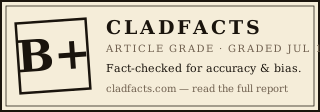
Unlock the full scoreboard
Letter grade, factuality, lean, and rationales — free with registration. No card required.
See grades free How grading works
Already have an account? Sign in. The full report below is free to read.
Embed this grade
Disagree with this grade or political lean?
Flagging is open to every reader with a free account. Sign in or create one to dispute this report.
Topics in this report
Summary
Rep. Mario Diaz-Balart delivered floor remarks on July 15, 2026, presenting the House-passed FY2027 National Security, Department of State, and Related Programs Appropriations bill (H.R. 8595). He opened by noting the recent death of Sen. Lindsey Graham and thanked bipartisan leaders before outlining the bill's funding and restrictions. The bill provides $47.32 billion total, $2.7 billion below FY2026 enacted levels, while maintaining or increasing key security assistance. It details support for Israel, Taiwan, Indo-Pacific partners, Western Hemisphere allies, fentanyl interdiction, and democratic transitions; it also lists prohibitions on funding for China, the Taliban, UNRWA, WHO, UNFPA, and certain Cuba-related entities, plus conditions on Mexico water deliveries and UN voting records.
Editorial Assessment
The speech accurately describes the bill's allocations and policy riders as confirmed in House Appropriations Committee releases and summaries. Viewers receive a clear partisan framing of the legislation as disciplined national-security spending without counterbalancing analysis of proposed cuts' effects on global health programs or multilateral institutions. PEPFAR reductions are presented as maintaining outcomes, though independent summaries note specific bilateral HIV cuts. The remarks omit Democratic critiques or alternative funding proposals. Missing context includes the bill's status after House passage and alignment with the administration's deeper proposed reductions.
Key Moments
FY27 bill delivers another $2.7 billion in reductions from prior year while funding national security priorities at or above prior levels
Matches House Appropriations Committee press release and bill summary for H.R. 8595
Maintains $1.8 billion for Indo-Pacific partners including $500 million military assistance for Taiwan; fully funds $3.3 billion Israel MOU
Confirmed in committee remarks and bill details
Cuts assessed UN funding by $1.8 billion, provides no funds for regular budget, and prohibits funding for WHO and UNRWA
Directly stated in bill provisions and committee summaries
PEPFAR transition reduces funding while maintaining the same outcomes through increased partner contributions
Bill reduces bilateral HIV funding; independent analyses note specific cuts without confirming unchanged outcomes
Bill supports full implementation of executive orders on secure border, limited government, free speech, ending censorship, and ending DEI programs
Bill report language includes related policy riders
Notable Concerns
- Partisan framing presents bill provisions without opposing views or impact analysis
Sources Consulted
- Committee Releases FY27 National Security, Department of State and Related Programs Bill
- Diaz-Balart Remarks at FY27 National Security, Department of State and Related Programs Bill
- FY2027 Budget and Appropriations (CRS-style report)
- House Appropriations Committee Releases FY 2027 NSRP Bill (KFF analysis)
- H.R. 8595 - National Security, Department of State, and Related Programs Appropriations Act, 2027
- House approves National Security and State Department Appropriations Act for 2027