Sen. Britt questions Sec. Hegseth on Ukraine aid delays, fertilizer prices, and military funding shortfalls
Source: Senator Katie Boyd Britt · All Senator Katie Boyd Britt reports
Unlock the full scoreboard
Letter grade, factuality, lean, and rationales — free with registration. No card required.
See grades free How grading works
Already have an account? Sign in. The full report below is free to read.
Embed this grade
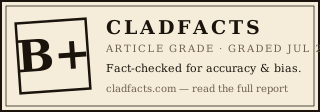
Disagree with this grade or political lean?
Flagging is open to every reader with a free account. Sign in or create one to dispute this report.
Topics in this report
Summary
The segment shows Sen. Katie Britt (R-AL) questioning Defense Secretary Pete Hegseth and Gen. Jack Keane at a Senate Appropriations hearing. Topics include past Ukraine supplemental funding, munitions delivery timelines, global fertilizer and agriculture price effects from the Russia-Ukraine war, sanctions' potential impact on Russia, alleged Russia-China support for Iran, and risks from congressional delays on NDAA, FISA, and appropriations. Hegseth and Keane respond on prioritizing US forces, underfunding risks, and negative effects of continuing resolutions or shutdowns. The exchange draws on five prior Ukraine supplementals and references recent reports on sanctions and adversaries.
Editorial Assessment
Claims on the number of Ukraine supplementals and fertilizer price surges align with primary records and USDA/World Bank data. Russia's economic pressures in 2026 are corroborated by recent analyses of sanctions and war spending. Viewer may miss that Biden-era supplementals passed with bipartisan votes and that munitions pipelines involved production ramp-up timelines beyond simple delays. Framing emphasizes prior administration shortfalls and current dysfunction while treating prioritization of US troops as self-evident. Overall accurate on specifics but one-sided in context selection.
Key Moments
Five supplemental bills passed under Biden for Ukraine
Congressional Research Service and oversight records confirm five Ukraine supplemental appropriations acts FY2022-FY2024.
Fertilizer prices rose about 55% due to the war
USDA data shows MOP up 53% and other fertilizers over 50% from Feb-April 2022; broader prices more than doubled.
Russia's economy is struggling and sanctions could force negotiations
2026 reports document slowing growth (0.4% projected), depleted reserves, and sanctions pressure on oil revenues.
Biden administration dragged feet on munitions after congressional directives
Supplementals passed rapidly; production and delivery timelines reflected industrial base limits rather than solely policy delays.
Notable Concerns
- Selective focus on past delays omits ongoing pipeline and production constraints