Tina Smith Challenges Trump's Reciprocal Tariffs in Senate Hearing With Jamieson Greer
Source: Capitol Clips · All Capitol Clips reports
Unlock the full scoreboard
Letter grade, factuality, lean, and rationales — free with registration. No card required.
See grades free How grading works
Already have an account? Sign in. The full report below is free to read.
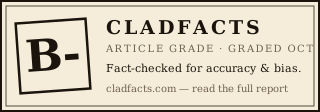
Embed this grade
Disagree with this grade or political lean?
Flagging is open to every reader with a free account. Sign in or create one to dispute this report.
Topics in this report
Summary
The Capitol Clips video presents a April 2025 Senate Finance Committee exchange between Sen. Tina Smith (D-MN) and USTR Jamieson Greer on the Trump administration's reciprocal tariff policy. Smith described the approach as chaotic and indiscriminate, a 'trade war' harming Minnesota farmers facing low prices and high input costs, Iron Range steelworkers (noting ~500 layoffs tied to slumping auto demand), and consumers viewing it as a sales tax amid stock market drops. She questioned the goals—revenue, fentanyl, or deficit reduction—and the arbitrary one-year trade-deficit formula for setting rates, asking if it would update with new data or provide long-term stability for onshoring.
Editorial Assessment
The claims hold up on core facts: the administration did use trade deficits as a proxy for unfair practices per White House economists; a baseline 10% tariff applied broadly (including to surplus countries); and the US goods/services deficit remained large or widened in 2026 data despite tariffs. Viewers miss that tariffs evolved post-Supreme Court ruling limiting IEEPA use, shifting to Section 301/232 authorities, with some negotiations and China reviews continuing into 2026. Smith's constituent examples are directionally accurate—farm expenses rose sharply on fuel/fertilizer, Iron Range saw hundreds of layoffs amid steel/auto turbulence—but causation is mixed, as global demand, interest rates, and energy shocks (including Iran-related) also factor. Greer correctly noted most countries avoided retaliation and that piecemeal targeting risks arbitrage. The framing leans toward highlighting uncertainty and costs over potential long-term manufacturing gains or revenue, potentially skewing perception of early-stage policy whose full effects on investment and deficits are still unfolding per 2026 reviews.
Key Moments
Trump started a big trade war with allies and adversaries; policy is indiscriminate and chaotic
Greer rejected 'trade war' label, noting most countries not retaliating; policy used broad 10% baseline plus reciprocal rates based on deficits to prevent arbitrage, per executive orders.
Formula for reciprocal tariffs based on one-year trade deficit as approximation of unfair practices, subsidies, dumping
Greer confirmed it came from White House economists; 2025 orders tied rates to persistent deficits with individual countries.
Minnesotans freaked out: farmers face worst economy in 25 years with lower prices, higher input costs; ~500 Iron Range layoffs from slumping car demand
Farm net income projected down modestly in 2026 with sharply higher fuel/fertilizer expenses; Iron Range saw 600+ layoffs in 2025-26 tied to auto/steel demand and tariffs, though some mines later rebounded partially.
Tariffs are a giant sales tax on every American household, plummeting retirement accounts and driving up living costs
Tariffs raise import prices (often passed to consumers), but 'giant sales tax' and direct 'plummeting' link overstated; Sept 2026 CPI rose 3.7% YoY with gasoline surge, not solely attributable to tariffs.
Goals include raising revenue, stopping fentanyl, closing $1.2T trade deficit left by Biden; tariffs as negotiating tool or long-term protection
Greer cited deficit/offshoring/non-reciprocal treatment as primary; acknowledged revenue effect and negotiations; official 2025 orders referenced emergency over deficits and unfair practices.
Notable Concerns
- Overly dramatic narration ('freaked out,' 'giant sales tax,' 'plummet retirement accounts') without specific data on pass-through rates or net household impact
- Limited discussion of tariff revenue collected or specific negotiation outcomes achieved by 2026
Sources Consulted
- U.S. trade deficit widens to $105.6 billion as imports hit record
- CPI for all items increases 0.6% in September; gasoline rises
- Donald Trump's executive orders and actions on trade and tariffs, 2025-2026
- Active Presidential Tariff Actions in 2026: Fact Sheet
- As mining layoffs persist, Iron Range towns brace for deeper economic fallout
- USDA Revises Farm Income Higher, but Costs Still Bite
- Trump Administration Tariffs Are Not Achieving Their Goals
- 'Where Did That Formula Come From?': Tina Smith Grills Trade Rep. On Trump's Blanket Tariffs