Blackburn Sues Jack Smith Over Secret Phone Records in Trump Probe
Source: Seasoned & Unfiltered with Steveo · All Seasoned & Unfiltered with Steveo reports
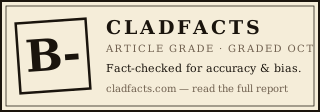
Unlock the full scoreboard
Letter grade, factuality, lean, and rationales — free with registration. No card required.
See grades free How grading works
Already have an account? Sign in. The full report below is free to read.
Embed this grade
Disagree with this grade or political lean?
Flagging is open to every reader with a free account. Sign in or create one to dispute this report.
Topics in this report
Summary
The short video from Seasoned & Unfiltered discusses Senator Marsha Blackburn's lawsuit against former Special Counsel Jack Smith for unlawfully obtaining her cell phone toll records during the Arctic Frost investigation into Trump's 2020 election challenges. It highlights the suit's focus on transparency—what data was taken, when, and how used—plus demands for record destruction and nominal damages to test if the government crossed constitutional lines. The host calls for release of subpoenas, legal justifications, and retention policies, a congressional investigation, and questions whether records should be kept indefinitely. It ends with a consistency test: would the same actions be defended if roles were reversed, warning that even small political donations should not place personal information in government databases.
The segment relies on Blackburn's official statements and Senate Judiciary Committee disclosures from September-October 2026, with no named opposing experts or Smith directly quoted. It uses the lawsuit filing and Grassley-released whistleblower data on donor checks and spreadsheets as the main throughline.
Editorial Assessment
The broadcast accurately captures the core of Blackburn's suit and the scale of data collection revealed by Sen. Grassley, including invasive details on thousands of small-dollar donors. Viewers miss important context: toll records (who called whom and when, not content) are standard in federal probes, Smith testified the data helped corroborate evidence of coordination around January 6, and the investigation targeted potential crimes, not politics per se. The heavy emphasis on 'weaponization' and reversal test skews perception toward viewing all such subpoenas as partisan abuse, while downplaying that similar tools have been used across administrations and that courts have historically upheld grand-jury subpoenas with nondisclosure orders. The segment treats retention of lawfully obtained records as inherently suspicious without noting standard DOJ retention policies or that the suit itself will test these claims in court. Overall, it is mostly factual on events but presents a one-sided constitutional interpretation.
Key Moments
Senator Marsha Blackburn filed a lawsuit seeking information on what government obtained from her, when, how used, plus destruction of records and nominal damages
Confirmed in her Sept. 30, 2026 complaint filed by NCLA; suit challenges Smith's appointment under Appointments Clause and alleges Speech or Debate Clause violation via secret Verizon toll records subpoena.
The point is establishing whether the government crossed a line by placing personal information like home addresses and financial data in a government database because of politics
Data came from lawful subpoenas in Arctic Frost probe; Grassley disclosures confirm 4,782 donor checks (with addresses, bank info) and spreadsheets on 639k supporters, but Smith testified it was for legitimate criminal investigation of election interference, not targeting politics alone.
Government should release subpoenas, legal justifications, retention policies, and access records rather than selective talking points
This mirrors Blackburn's and Grassley's oversight demands; Senate Judiciary released whistleblower info on the subpoenas and data in Sept.-Oct. 2026.
Even donating five bucks or buying a hat should not make you wonder if your home address and financial information are in a government database because of your politics
Grassley memo confirms MAGA hat buyer shipping addresses and small-donor checks were obtained, but these were returned in response to specific subpoenas tied to Trump-aligned entities, not a general political database; records are not public.
Congress should investigate this as a constitutional issue, not a partisan scandal, and records should not be retained indefinitely
While oversight occurred via Senate hearings, the segment offers no specific legal basis that routine post-investigation record retention violates the Constitution; courts typically defer to executive retention policies absent statute.
Notable Concerns
- One-sided framing presents investigative subpoenas as automatic overreach without Smith's stated rationale or legal precedents for metadata collection
- Exaggerates scope by implying routine donor data sweeps were solely political rather than tied to financial trails in an election-interference probe
- Missing context on why nondisclosure orders are common in grand-jury matters to protect investigation integrity
Sources Consulted
- Blackburn Sues Jack Smith for Unlawfully Seizing Phone Records
- Senator Marsha Blackburn Sues Over Jack Smith’s Subpoena During Trump Inquiry
- Grassley Shares Explosive Arctic Frost Update Revealing Jack Smith Obtained Treasure Trove of Data for Over Half a Million Republican Supporters
- Biden DOJ, Jack Smith obtained data on 639K donors in Arctic Frost probe: Grassley
- Senator Marsha Blackburn v. John L. Smith Complaint
- Jack Smith Collected Banking Information On Thousands Of Trump Supporters
- Blackburn sues Jack Smith over phone records
- Sen. Marsha Blackburn sues Jack Smith over unconstitutional appointment