Kaine calls Trump Iran strikes 'war of choice,' links to higher gas prices
Source: Senator Kaine · All Senator Kaine reports
Unlock the full scoreboard
Letter grade, factuality, lean, and rationales — free with registration. No card required.
See grades free How grading works
Already have an account? Sign in. The full report below is free to read.
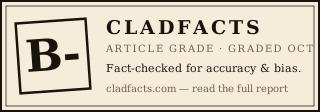
Embed this grade
Disagree with this grade or political lean?
Flagging is open to every reader with a free account. Sign in or create one to dispute this report.
Topics in this report
Summary
In a Fox News Sunday interview, Sen. Tim Kaine (D-VA) pushed back against claims that Iran posed an existential nuclear threat justifying U.S. military action. He defended the 2015 JCPOA as having successfully constrained Iran's nuclear program under international inspections until Trump's 2018 withdrawal, argued the 2025 U.S. strikes only temporarily set back capabilities, and called the February 2026 strikes a 'war of choice' launched without congressional consultation that has driven up gas and diesel prices. Kaine also criticized Trump's waiver of sanctions under the Lindsey Graham Act on Russia as cozying up to Putin and harming Ukraine, while tying higher energy costs to the Iran conflict rather than Russian diesel exports. The segment ended with discussion of Democratic midterm strategy.
Kaine, a Foreign Relations Committee member, cited his recent bipartisan trip to Ukraine and Europe. The host referenced counterpoints from Sen. Dave McCormick and Mollie Hemingway on Iranian non-compliance, proxy activity, and national interest in Russia deals for diesel prices. Graphics on gas prices were implied but not detailed.
Editorial Assessment
The interview presents a strongly partisan Democratic critique of Trump foreign policy that holds up on several factual pillars but omits critical context that could skew viewer perceptions. Kaine accurately notes the JCPOA reduced Iran's enriched uranium stockpile and centrifuges with IAEA monitoring, and that U.S. intelligence assessments found the 2025 strikes damaged but did not 'obliterate' key sites, setting the program back by months rather than years. Gas prices have indeed surged over $1 per gallon nationally since the Feb. 28, 2026 strikes due to Strait of Hormuz disruptions. However, viewers miss that Iran began violating JCPOA limits after the U.S. withdrawal (reaching 60% enrichment by 2024-2025), never ceased proxy support, and that multiple administrations viewed the deal's sunset clauses as problematic. Claims of an 'illegal' war overlook Trump's War Powers notification and failed congressional attempts to restrain action. The Russia waiver is framed as weakness without noting Trump's stated goal of using it for peace talks and diesel market relief. Overall, selective emphasis on costs and diplomacy over security threats tilts the narrative left while most specific claims are directionally accurate but incomplete.
Key Moments
Trump's statement that no other president handled the Iran nuclear threat is a lie; the JCPOA controlled enriched uranium and centrifuges under inspection until he tore it up
JCPOA did constrain program (stockpile to 300kg at 3.67%, limited centrifuges); IAEA verified compliance initially, but Iran violated limits post-2018 withdrawal and reached 60% enrichment; proxies continued activity.
Trump's 2025 strikes 'obliterated' the Iranian nuclear threat, yet here we are in a war
Trump claimed 'obliterated'; multiple intel assessments (DIA, others) found sites damaged but not destroyed, centrifuges largely intact, program set back months, not eliminated.
The president started a war on February 28th without consulting Congress or allies; American troops are being killed and families suffering from high gas prices
Strikes began Feb. 28, 2026; notification to Congress after (War Powers); no formal prior authorization or declaration; Pentagon reports 21 U.S. deaths, 865 wounded; national gas up >$1/gal, diesel more since then.
Trump's waiver of Lindsey Graham sanctions on Russia is outrageous, continues cozying up to Putin instead of standing with Ukraine
Trump signed waiver citing national interest for peace talks and diesel supply; drew bipartisan backlash including from Zelenskyy; bill aimed at pressuring Russia via tariffs on buyers like China/India.
Stopping the Iran war and Trump's tariffs would bring prices down for everyday Americans
Iran conflict is primary driver of recent energy spike per market data; Biden kept many Trump tariffs and added others; broader inflation, OPEC, and global factors also affect prices.
Notable Concerns
- Overstated JCPOA success by omitting Iran's documented violations and proxy activities
- Strong partisan language ('lie,' 'idiotic,' 'illegal') without equivalent scrutiny of Iranian actions
- Causal attribution of all price rises to Iran war ignores global factors and pre-existing trends
Sources Consulted
- Trump’s Gamble to End the Iran War
- Iranian Nuclear Program Damaged, Not 'Obliterated' by U.S. Attack
- How Iran Accumulated 11 Tons of Enriched Uranium
- Trump signs order waiving Graham Act sanctions on Russia
- Gas prices in US hit $4.29 nationwide
- Pentagon raises official toll of troops who died during war with Iran to 21
- Did Trump declare war and did Congress approve Iran attacks?
- The Status of Iran's Nuclear Program