Owens counters Omar on higher ed costs, attributes crisis to 16 years of government control
Source: Critical Thinking · All Critical Thinking reports
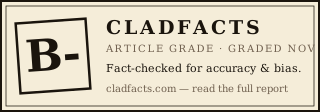
Unlock the full scoreboard
Letter grade, factuality, lean, and rationales — free with registration. No card required.
See grades free How grading works
Already have an account? Sign in. The full report below is free to read.
Embed this grade
Disagree with this grade or political lean?
Flagging is open to every reader with a free account. Sign in or create one to dispute this report.
Topics in this report
Summary
The clip is from a House Education & Workforce Committee hearing on higher education costs. Rep. Ilhan Omar criticized the 2025 Republican 'One Big Beautiful Bill' (also called working families bill) for cutting ~$1 trillion from Medicaid and over $180 billion from SNAP, arguing it harms working families and contradicts claims of making college more accessible. Rep. Burgess Owens agreed problems like exploding tuition, high dropout rates, and unpayable debt are severe but blamed 16 years of government control since the 2010 ACA, not recent reforms. He advocated capitalism (competition, merit, ROI), entrepreneurship, trades as alternatives to four-year degrees, and market accountability for colleges.
The YouTube narration from 'Critical Thinking' praises Owens for challenging government-centric views with facts on incentives and outcomes. Sourcing relies on hearing statements; no independent data graphics shown. Owens referenced his recent Latin America trip and Utah's small business success.
Editorial Assessment
The exchange highlights a core philosophical divide: Omar focuses on immediate harm from safety-net reductions to low-income families' health and food security, while Owens pivots to systemic higher-ed failures and promotes market reforms. Omar's cut numbers are well-supported by CBO scores for the bill. Owens' diagnosis of long-term cost explosion and poor ROI is directionally accurate—net tuition has risen over decades despite aid, with persistent dropout rates around 30-40% and debt burdens—but attributing it primarily to the ACA is unsupported; tuition growth slowed post-2010 in real terms per College Board data, and federal student aid expansion is a stronger cited factor. Viewers miss broader context: the bill's cuts fund tax extensions, work requirements have reduced SNAP rolls by millions already, and higher-ed costs involve administrative bloat and state disinvestment. The channel's framing amplifies the conservative case without equal scrutiny of reform outcomes or cut consequences.
Key Moments
The bill cut a trillion dollars out of Medicaid and over $180 billion from SNAP
Matches CBO and CBPP analyses of the 2025 One Big Beautiful Bill/Republican reconciliation package; SNAP cuts ~$186-187B over 10 years.
Explosion of tuition, high dropout rates, unpayable debt, and lack of job skills have persisted for the last 16 years under government control since the 2010 ACA
Problems are real (College Board: sticker prices up sharply long-term; ~33% dropout; $1.7T+ debt), but growth slowed post-2010; ACA mainly affected health insurance, not direct higher-ed driver.
Utah leads the country in small business startups due to entrepreneurial culture
Utah consistently ranks top 3-5 nationally (WalletHub, CNBC, Milken) for business friendliness, startup activity, and small business growth.
Government solutions have never worked; capitalism (competition, merit, ROI, profit) drives better outcomes and innovation in education
Opinion/philosophy; evidence mixed—U.S. higher ed leads in innovation but faces criticism for costs/outcomes; international shifts away from heavy government models noted but selective.
Reforms in the last 6 months will introduce competition, make institutions accountable, promote trades, and improve ROI without requiring debt for four-year college
Bill includes changes to lending/Pell but early implementation; outcomes on cost reduction and enrollment shifts remain unproven as of late 2026.
Notable Concerns
- Heavy partisan framing in narration that celebrates one side's philosophy as 'dismantling' the other without balanced counter-evidence
- Oversimplification of higher-ed cost drivers; ignores role of federal loans enabling price increases (Bennett Hypothesis)
- Limited discussion of documented harms from Medicaid/SNAP reductions, such as increased uninsured rates and food insecurity projected by CBO
Sources Consulted
- 2025 Budget Impacts: House Bill Would Cut Assistance and Raise Costs for Seniors
- By the Numbers: Senate Republican Leadership’s Reconciliation Bill Takes Food Assistance Away From Millions of People
- Trends in College Pricing and Student Aid 2026
- Utah ranked #2 best state to start a business
- Student Loan Debt - Heritage Foundation 2026 Index
- National Student Clearinghouse: Persistence and Retention Report
- House E&W Runaway College Spending Hearing Transcript