Menu

Clad

Grading Content & Exposing Bias

Vol. I · No. 178 · 1662 Reports Sunday, June 28, 2026

Topic · 3 reports

American Revolution

🔒 Average grade & political-lean for this topic are Premium.

Share Text X Facebook
🔒 Grade & lean — Premium

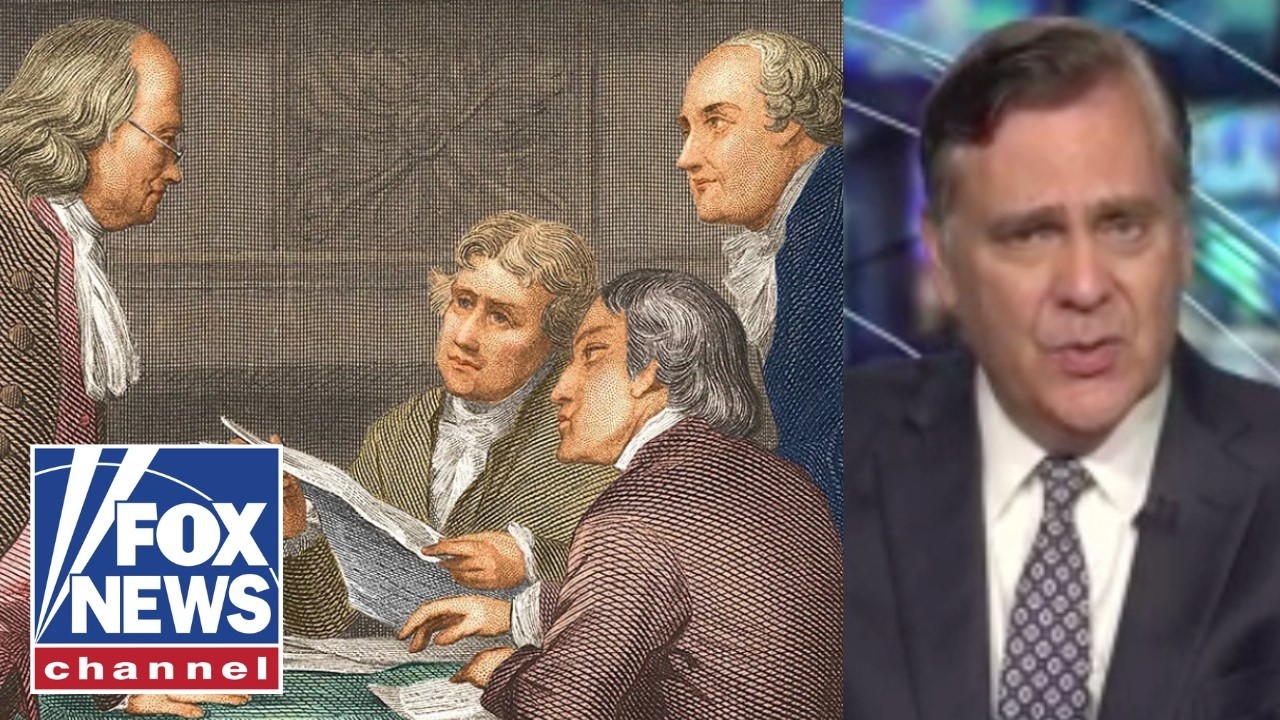
Turley Discusses Enlightenment Roots of Declaration of Independence

Jun 28, 2026

The segment marks the approach to the 250th anniversary of the Declaration of Independence on July 4, 2026. Host Mark Levin interviews law professor Jonathan Turley about the Second Continental Congress, the reasons for issuing the Declaration, and its Enlightenment foundations. Turley promotes his book Rage and the Republic: The Unfinished Story of the American Revolution. The discussion highlights European fascination with the American experiment and the document's roots in John Locke's ideas. It frames the Declaration as asserting rights from the Creator rather than government.

▶ Source: Fox News

🔒 Grade & lean — Premium

Turley Discusses 250th Anniversary, American vs. French Revolutions on Fox News

Jun 28, 2026

Fox News segment features law professor Jonathan Turley discussing the upcoming 250th anniversary of the Declaration of Independence. The conversation covers why the Founders issued the document, Enlightenment influences like Locke, the unique success of the American system compared to the French Revolution, and the roles of Thomas Paine and James Madison. Turley draws from his February 2026 book 'Rage and the Republic.' The segment references historical events, Paine's near-execution in France, and warns of modern efforts to alter constitutional structures. Sourcing relies on Turley as the primary expert with host prompts; no other guests or primary documents are presented.

▶ Source: Fox News

🔒 Grade & lean — Premium

C-SPAN Lecture Examines Religion's Role in American Revolution

Jun 28, 2026

C-SPAN aired a Washington University lecture by historian Mark Valeri on religion's contribution to the American Revolution as part of the 1776 Then and Now series. Valeri uses the story of Bethlehem, Connecticut, pastor Joseph Bellamy and examples like Sarah Osborne and Samuel West to show how Protestant conversion rhetoric, moral urgency, and sacred narratives helped shift colonial loyalties from Britain to independence. The lecture surveys diverse religious groups, their varying stances on rebellion, and three mechanisms—conversion language, crisis framing, and providential history—by which religion aided identity change. It draws on primary sermons, diaries, and recent books by scholars such as Mark Noll, Kate Carté, and Catherine Brekus while distinguishing the account from claims of a Christian founding.

▶ Source: C-SPAN