
Grading Content & Exposing Bias

Topic · 2 reports

extreme heat

Average grade, political-lean & social sentiment for this topic unlock with a free CladFacts account.

Video: NBC News highlights extreme heat, storms in Southern U.S. and Kansas City

NBC News highlights extreme heat, storms in Southern U.S. and Kansas City

Aug 19, 2026

The segment reported on heat-fueled thunderstorms drenching the Heartland after overnight storms in Kansas City, Missouri, that ripped the roof off an apartment complex, displacing dozens and damaging vehicles. It then focused on extreme heat and humidity west of Houston, where the heat index reached 107°F, prompting early-morning football practices, shortened school recess, and heightened precautions. Houston firefighters have responded to more than 150 heat emergencies this month amid triple-digit temperatures and high humidity described as unusually tough on the body. Sourcing relied on on-the-ground footage, interviews with affected residents, school officials in Katy, and a firefighter. No named experts or graphics with historical comparisons were shown; the report emphasized immediate human impacts and safety adaptations rather than long-term trends.

Source: NBC News
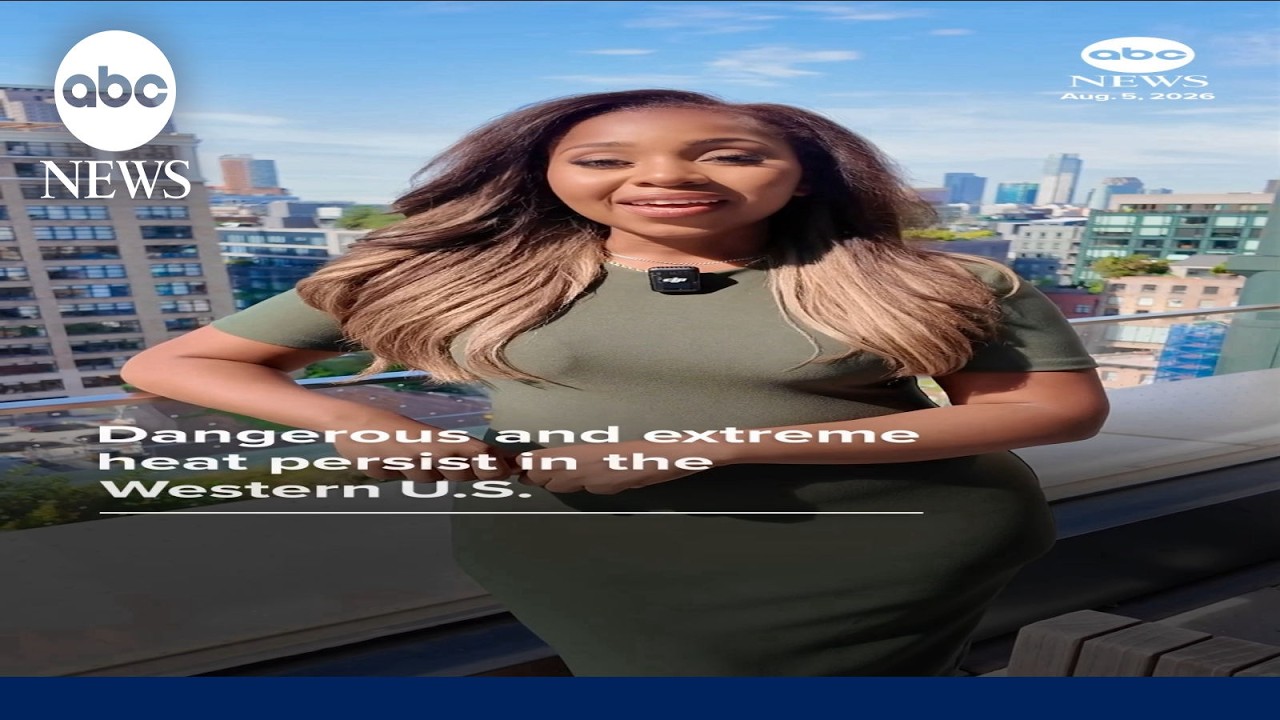
Video: ABC News warns of persistent extreme heat, advisories across western U.S.

ABC News warns of persistent extreme heat, advisories across western U.S.

Aug 5, 2026

The ABC News segment focused on dangerous and extreme heat persisting in the western United States, shifting attention from ongoing Northwest wildfires and associated smoke reaching Utah. It highlighted forecast highs near 98°F in Portland, 90s in Seattle and Spokane over the next days, Las Vegas hitting its hottest day of the year recently with triple digits expected, and color-coded alerts: orange for heat advisories and hot pink for excessive heat warnings. The meteorologist urged viewers in affected areas to stay hydrated, seek cool places, and monitor children during outdoor activities. Sourcing relied on implied National Weather Service data and maps, with no named experts or anonymous officials. The brief clip emphasized real-time preparedness without deeper analysis of climate trends or specific fire updates. Throughline was practical safety advice tied to visible weather graphics.

Source: ABC News